Last reviewed: November 27, 2026
By Ethan Miller · Read time: 9 minutes
Key takeaways
- Choose court footwear designed for lateral movement rather than casual trainers.
- Match the outsole to the club’s surface and cleaning policy.
- Stability should come from a secure fit and supportive construction, not stiffness alone.
- Replace footwear when grip, cushioning or upper support visibly deteriorates.
What indoor padel demands
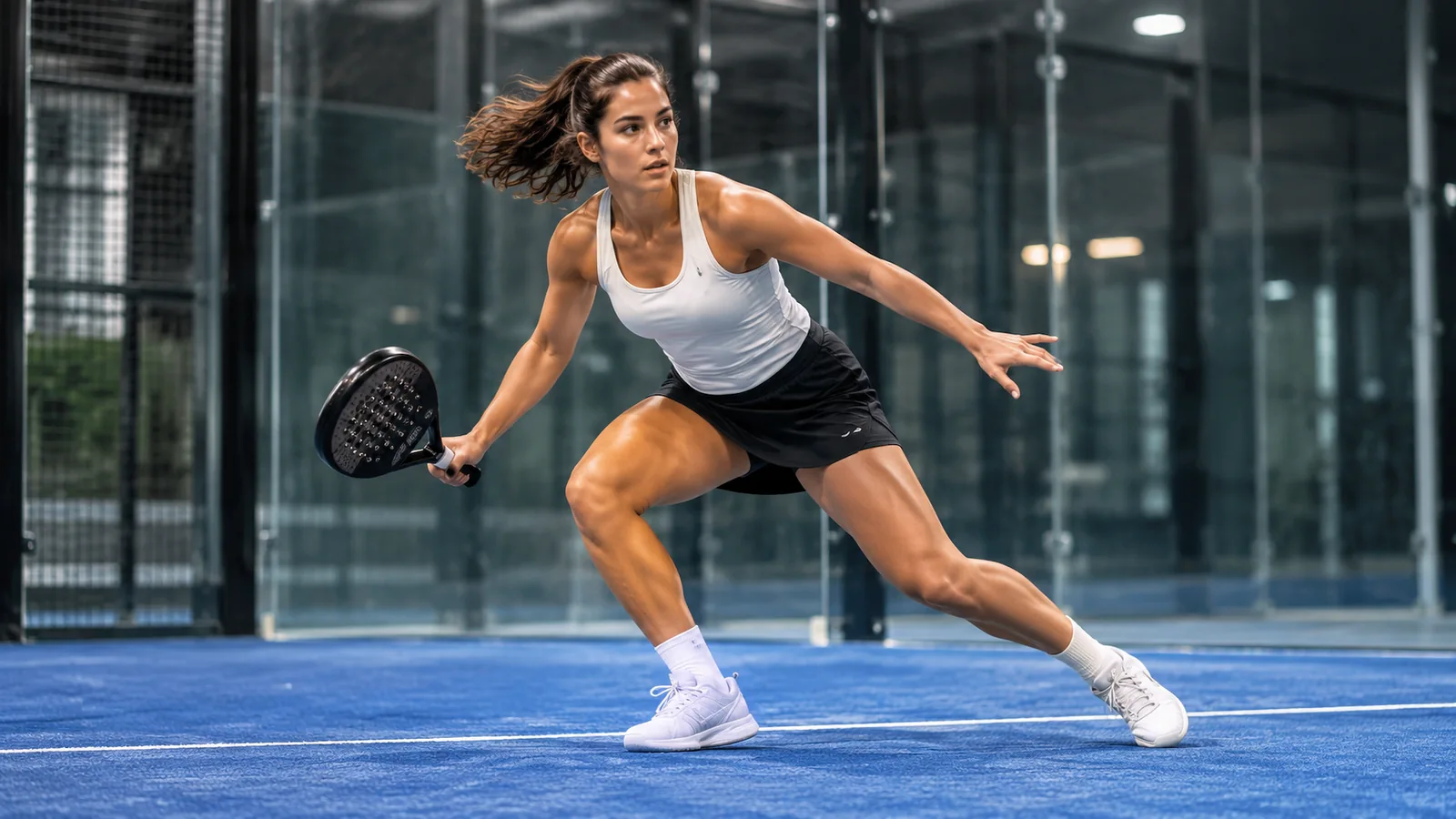
An indoor court removes wind and rain, but it does not remove the need to stop, rotate and change direction. Padel players move laterally, recover from the glass and sometimes lower their centre of gravity quickly. Running shoes are built mainly for forward travel and may not offer the outsole pattern or side support required by repeated court movement.
Start with the surface. Indoor clubs may use artificial turf with sand, carpet-like surfaces or other systems. Ask the venue what footwear is permitted; a shoe that is excellent on one surface can feel unpredictable on another, and some clubs prohibit marks or deep outdoor tread.
Footwear cannot correct poor movement mechanics or guarantee freedom from injury. It can, however, reduce an avoidable mismatch between your foot, the surface and the demands of the sport. If you are returning after an injury, increase playing time gradually and obtain individual medical or physiotherapy advice where appropriate.
Grip and outsole
Look for a non-marking court outsole and a tread pattern intended for racket sports. Herringbone-style patterns are common in tennis and padel footwear, while other designs use mixed zones for braking and release. The marketing name matters less than the manufacturer’s stated surface use and the venue’s rules.
Too little grip can make a stop feel unsafe; too much grip can interfere with a smooth pivot. Dust and loose sand also change traction. Wipe the outsole clean and avoid wearing court shoes outdoors, where grit wears the rubber rapidly. Never try to “break in” new shoes by walking them on dirty pavements if you expect the return policy to apply.
Inspect the sole after each few sessions. A smooth patch under the forefoot, a torn edge or a tread that has become visibly shallow changes the way the shoe releases. Indoor floors can look clean while still collecting dust, so clean the outsole with the method recommended by the manufacturer rather than applying an unknown solvent.
Lateral stability
A stable shoe normally combines a secure heel counter, a supportive upper, a platform that does not twist excessively and lacing that keeps the foot from sliding. Stability does not mean choosing the heaviest shoe. If the shoe restricts natural movement or causes pressure on the forefoot, you may move poorly and fatigue sooner.
Try both shoes with the socks you play in. Perform a gentle side step, a split-step landing and a controlled stop. Your heel should stay planted, the midfoot should feel held and the toes should have room to move. If you use orthotics, check compatibility before purchase.
A shoe that feels locked down in a shop can become uncomfortable after an hour. Walk, bend the knees and make a few lateral movements before deciding. Compare left and right feet because small differences in width or volume are common. Secure fit is a practical requirement; it is not a reason to accept numbness, rubbing or sharp pressure.
Comfort and fit
Fit is personal, but several checks are universal: measure both feet late in the day, allow practical toe space, and do not assume a familiar running-shoe size will transfer to every court model. Cushioning should protect against repeated impact without making the shoe feel unstable. A breathable upper is useful for warm indoor halls, while a more structured upper may suit players who need extra containment.
Do not play a full session in new shoes without a gradual break-in. Keep the receipt and review the return policy; some retailers will not accept used footwear. If a hot spot appears during a short practice, treat it as useful information rather than waiting for a blister.
Width is as important as length. A narrow shoe can create pressure over the little toe; a roomy shoe can allow the foot to slide during a lateral stop. Socks change volume and friction, so try the pair you actually use. If you use a custom insole, remove the original insole only when the construction and fit still work as intended.
Match the shoe to the surface
Before you shop, message the club or read its current venue rules. Ask three specific questions: What is the court surface? Are non-marking soles required? Does the venue prohibit particular outdoor or deep-tread footwear? “Indoor” describes the building, not necessarily a universal playing surface.
If you play at more than one venue, choose the shoe that matches the surface where you spend most of your sessions, or keep separate pairs. Do not assume an outsole designed for one type of turf will feel identical on another. Surface conditions, sand distribution, humidity and cleaning routines all affect traction.
Manufacturers sometimes describe a shoe as suitable for padel, tennis or multiple court sports. That is useful context, not independent proof of performance. Compare the published surface guidance with your club’s rule and retain a screenshot or note of the date when the information was checked.
A practical movement test
Use this sequence before a full match:
- **Ready position:** stand with knees slightly bent and check whether the heel remains planted.
- **Lateral shuffle:** take several controlled steps both ways; the foot should not slide inside the upper.
- **Split-step landing:** land quietly and check for pressure, wobbling or the urge to grip the floor with your toes.
- **Brake and recover:** move two or three steps, stop, then return to the ready position.
- **Low reach:** lower your centre of gravity as you would for a wall rebound without allowing the ankle to collapse inward.
- Confirm the outsole is suitable for your club’s indoor surface.
- Check “non-marking” and court-use claims on the official product page.
- Compare heel hold, width and toe room, not only colour and weight.
- Prefer a retailer with a clear size exchange policy.
- Try the shoes with your playing socks and any approved orthotic.
- Inspect the sole and midsole regularly; worn tread is a safety concern.
- If pain persists, stop playing and consult a qualified healthcare professional.
- On, official padel court footwear information: https://www.on.com/en-us/shop/o/on-padel-court-shoes (accessed 27 November 2026).
- Wilson, CourtGlide Padel product page: https://www.wilson.com/en-us/product/courtglide-padel-w-wrs01020 (accessed 27 November 2026; availability may vary).
- links: `/gear/`, `/best-padel-rackets-for-beginners/`, `/courts/`.
This is not a medical or laboratory test. It simply reveals obvious fit and traction problems before a long session. If pain, numbness or instability appears, stop and ask a qualified professional or the retailer about the correct next step.
Buying checklist
For equipment context, see the racket buying guide. Before travelling to a venue, check its published footwear policy or contact the club directly.
FAQ
Can I wear tennis shoes for indoor padel?
Often, a suitable tennis court shoe can work, but confirm the outsole and venue policy. A running shoe is less likely to provide the required lateral support.
Are indoor padel shoes different from outdoor shoes?
The appropriate outsole depends on the playing surface, not simply whether a roof is present. Ask the club and follow the manufacturer’s surface guidance.
How tight should padel shoes feel?
Secure but not painful. The heel and midfoot should not slide, while toes need enough room to move without hitting the front.
How long do padel shoes last?
There is no reliable universal number. Frequency, surface, body weight and movement style matter. Replace them when tread, cushioning or support is compromised.
Should I buy the most cushioned shoe?
Not automatically. Cushioning is only one part of the fit. A shoe that feels soft but allows the foot to slide can be less comfortable over a full session than a well-fitting, moderately cushioned model.
Can I use the same shoes outdoors?
You can ask the manufacturer, but outdoor dirt and rough surfaces usually accelerate outsole wear. Keeping indoor shoes clean and reserved for the court helps preserve their intended traction.
Sources and internal links
Affiliate disclosure: PadelBeacon may earn a commission from eligible footwear links at no additional cost to the reader. We do not claim testing, rankings, price guarantees or stock availability.
CTA: Before your next indoor booking, ask the club what sole is accepted and take a short movement test in the shoes before committing to a full match.